
In November 2025, a "NO SHOW" notice sent ripples through the autonomous driving industry. HAOMO AI, a once-celebrated startup that leveraged resources from Great Wall Motor and a Baidu-affiliated technical team to raise over 2 billion RMB cumulatively and reach a valuation exceeding $1 billion USD, exited the stage in a nearly "silent" manner. Its trajectory, from a capital darling to a quiet departure, not only reflects the company's own development challenges but also serves as a microcosm of the dramatic shifts in the auto driving industry's funding landscape.
In recent years, the auto driving sector experienced a phase of intense capital. In 2021, global funding related to autonomous driving reached a high of 93.2 billion RMB, spawning countless startup legends. However, 2023 became the industry's watershed. Capital enthusiasm, with total funding to 20 billion RMB, a 78% decrease. Capital shifted from "casting a wide net" to "precision investment," accelerating differentiation among companies. The exit stands as a symbolic event in this industry shake-up.
Changing Investment Rules: The Self-Driving Sector Cools Off
At the beginning, HAOMO AI emerged during a "golden age" of capital for auto driving. The rise of new technologies fueled market imagination about its future, leading to widespread capital deployment. Industry funding scaled, with massive inflows providing fertile ground for numerous startups to grow rapidly. HAOMO AI was a beneficiary of this wave.
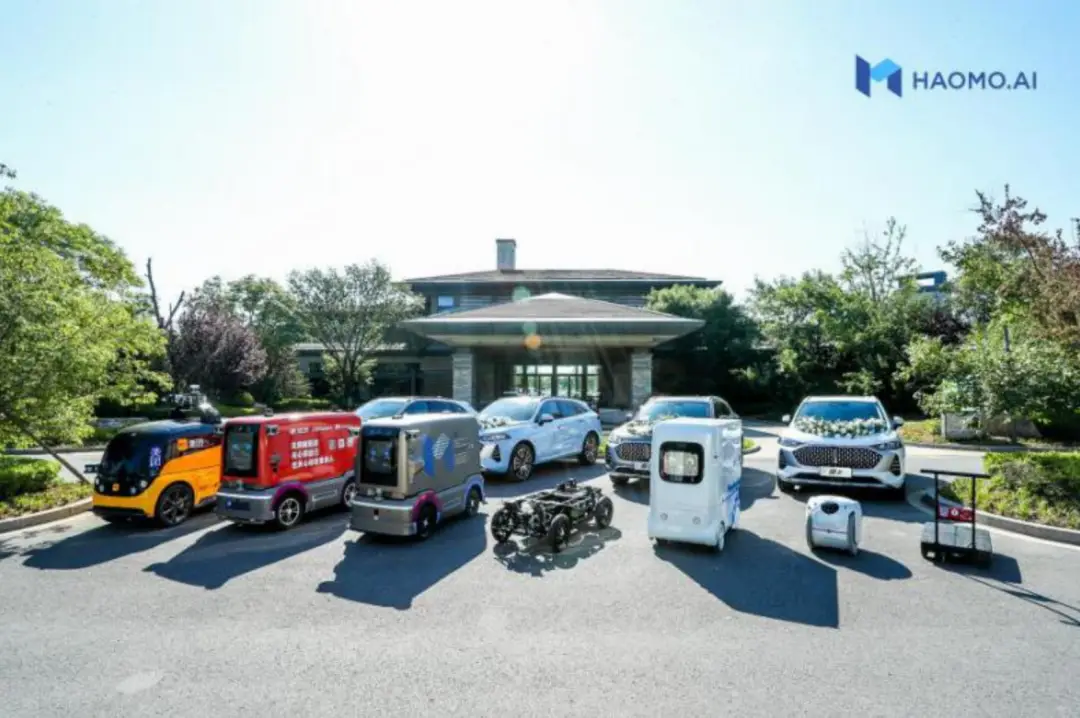
In that earlier era, investors were enthusiastic about the possibilities of the technology and scenarios, willing to pay for algorithm models not yet in mass production or unproven business models. As long as a company had a core technical team and a clear development direction, it could win capital favor even without achieving scaled implementation or profitability. Backed by Great Wall Motor's industrial support and the technical pedigree of its Baidu-affiliated team, HAOMO AI successfully secured multiple funding rounds, allowing it to rapidly expand its team and advance R&D.
However, as the technology implementation cycle proved much longer than anticipated, coupled with macroeconomic changes, capital began re-evaluating risks and returns. 2023 marked a significant turning point for funding in the autonomous driving sector. The funding environment cooled drastically, with total financing plummeting from a peak of 93.2 billion RMB to 20 billion RMB in 2024—a staggering 78% drop. Capital's attitude towards the autonomous driving shifted from "fervent" to "rational."
This change is the result of multiple factors. Technologically, the difficulty of implementing autonomous driving technology has far exceeded expectations. The leap from lab prototype to scaled commercial production requires overcoming multiple hurdles including technical reliability, scenario adaptability, and cost control. Most companies failed to achieve breakthrough technological progress and scaled implementation within expected timeframes, leading capital to reassess the technology's maturation cycle.
From a profit model perspective, the autonomous driving industry still lacks a clear and stable path to profitability. Most companies primarily rely on co-development revenue from automakers, demonstrating insufficient commercial monetization capability. The contradiction between long-term investment and limited returns has gradually eroded capital's patience.
At the same time, changes in the macroeconomic environment have made capital more conservative. Investment strategies have shifted from "casting a wide net" to "precision focus," with funds increasingly concentrated towards leading companies that possess mature technology, strong implementation capabilities, and clear profit potential. The industry's "Matthew Effect" is becoming increasingly pronounced. In such an environment, small and medium-sized startups like HAOMO AI face unprecedented funding pressure. Raising only 3 billion RMB in 2024 was far from sufficient to sustain its ongoing R&D and business expansion, making funding strain a major catalyst for its exit.
The shift in capital logic has not only redirected the flow of funds but has also forced the entire autonomous driving industry into a more rational development phase. Companies that relied on capital infusions without achieving tangible implementation results are gradually being weeded out in this funding downturn.
The Leading Players Party On, Small players need to Survive
The dramatic change in the funding environment has further intensified the stratification within the autonomous driving industry. The gap between leading companies and smaller players continues to widen, creating a clear dynamic of "leaders thriving, mid-tier struggling, and tail-enders being eliminated."
Leading companies, with their mature technology systems, scaled implementation results, and stable financial backing, have not only weathered the funding downturn but have used concentrated capital inflows to accelerate expansion and increase market share. Leveraging technological barriers and ecosystem synergy, they have further consolidated their leading positions. For example, Huawei has achieved mass production of map-free urban NOA through its full-stack "chip + algorithm + cloud platform" capabilities; Momenta secured partnerships with its "map-free end-to-end" solution, significantly increasing its market share. These companies not only attract disproportionate funding but also, through deep collaboration with automakers, form data closed-loops, seeing their financing scale and market share rise in tandem.
Small and medium-sized players face the dual pressures of "difficult fundraising" and "high costs." Their options are to either focus on niche scenarios to avoid direct competition with leaders or to integrate into leaders' ecosystems through mergers, acquisitions, or partnerships. For instance, some companies have turned to closed scenarios like sanitation or mining, or offer cost-effective hardware modules, seeking survival through differentiation. However, this path depends on a company's ability to pivot its technical direction quickly and establish a cost-control advantage.
Taking HAOMO AI as an example, it raised only 300 million RMB in 2024, a mere fraction of its earlier funding rounds. More critically, its hardware solution cost was as high as 8,000 RMB per set, while the industry average had been compressed to below 4,000 RMB. Lacking economies of scale and cost-control capabilities, it quickly lost competitiveness in the price war.
Capital providers are also adopting a more rational stance. A principal at an industrial fund noted, "The current investment logic has shifted from 'storytelling' to 'result-driven.' Companies must prove their technology can generate actual revenue, not just remain at the PowerPoint stage." This criterion directly filters companies into two categories: those that can quickly achieve commercial implementation and those with extreme cost advantages in vertical domains.
Behind the capital "cool-down" lies a re-evaluation of technology implementation cycles and profit models. The path to commercialization for autonomous driving remains unclear: Robotaxi daily order volumes are far below those of ride-hailing services, legal risks for L3 functionality are not fully resolved, and sensor and computing costs remain high. Investors are now demanding verifiable results—whether in the form of installation volumes in mass-produced vehicles, commercialization revenue from specific scenarios, or a moat of technological patents. This shift in logic has directly increased funding pressure on smaller players, with Momenta's exit being a concentrated manifestation of this trend.
During this situation, hope is not lost for the autonomous driving industry. Technological breakthroughs, policy support, and business model innovation could still be key to breaking the deadlock. First, technology must return to "scenario-based implementation." Leading companies are enhancing their ability to handle complex road conditions through integrated "perception + decision-making" architectures. For example, Momenta's "Unified End-to-End Large Model" has captured a 60.1% market share in urban NOA scenarios. Smaller players, meanwhile, need to focus on specific scenarios like low-speed campus logistics or Robotaxi services in designated areas to reduce technical complexity and cost.
In addition, business models urgently need innovation. The one-time buyout model has proven unsustainable. Models like "hardware pre-installation + software subscription" or "pay-per-use" can lower the initial investment threshold for both automakers and end-users. Finally, policy and industrial chain coordination will become critical variables. In 2025, China initiated L3 autonomous driving pilots and is promoting the establishment of high-precision map standards. Companies that seize this policy window and achieve technological implementation through compliant pathways may unlock new markets within the regulatory framework.
The exit of HAOMO AI marks a watershed moment for the autonomous driving industry, signaling a shift from "conceptual euphoria" to "practical implementation." The rational return of capital is forcing companies to abandon grandiose narratives and confront technical bottlenecks and commercial realities. For small and medium-sized players, survival hinges on one of two paths: either becoming an ecological partner to industry leaders or building an irreplaceable niche in specific scenarios.




 Room 1104,Block B,JingBan Building,6 Middle Beisanhuan Road,Xicheng District,Beijing
 (8610)62383600
 quanqixiang@carresearch.cn
Follow us
Scan the QR code to follow our official WeChat account车市睿见 Interact on MicroBlog@车市睿见
 京公网安备:11010202007638号|京ICP备17032593号-2|Report illegal and bad information:010-65993545-8019 jubao@carresearch.com
Legal support:Beijing Yingke Law Firm|All rights reserved, DO NOT reproduce without permission

 News
News