
The 23rd Guangzhou International Automotive Exhibition, the final A-level show concluding the 14th Five-Year Plan period, has opened. As the year's grand finale, it consistently mirrors the industry's latest trends amid fierce competition. Official data confirms this: 93 global debut vehicles (a significant YoY increase), with NEVs comprising nearly 60% of exhibits—clear evidence of the industry's ongoing transformation.
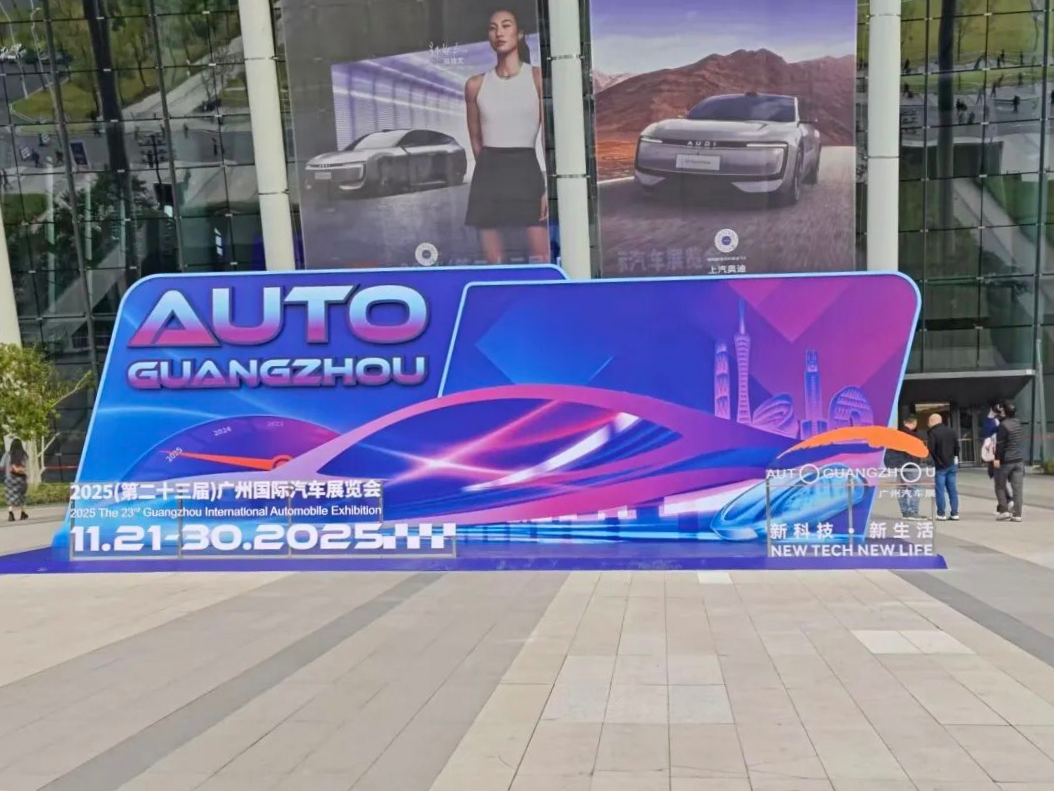
The transformation in China's auto market within a single year is significant. Comparing consecutive Guangzhou Auto Shows reveals notable changes across industry data, competitive dynamics, and technology trends. On-site enthusiasm diverged noticeably: startup booths were less crowded and more pragmatic, while legacy and joint-venture brands attracted renewed attention with aggressive launches and accelerated localization.
Pragmatism and Aggressive Counterattacks
The most striking feature was the clear divergence between startups and legacy automakers in strategy and presentation. Startup brands, previously known for leveraging executive celebrity and blockbuster launches, collectively adopted a pragmatic approach. Xiaomi's presentation was led by Vice President Li Xiaoshuang. Richard Yu (Huawei) made fewer cross-pavilion appearances or live streams. The visibility and buzz generated by startup executives noticeably diminished compared to last year.
Product launches were restrained. Apart from the global debut of the Leapmotor A10 and XPeng X9's auto show premiere, most startups focused on reviewing annual technological achievements and market performance—XPeng celebrating its 1 millionth vehicle, Li Auto sharing VLA driver model data, and ONVO launching niche derivatives like the L90 Black Knight edition.
The startups' subdued presence stems from strategic evolution. After years of expansion, profitability and actual sales have become primary goals, given the uncertain conversion of auto show "buzz" into orders.
Core startup customers increasingly rely on online channels for transparent pricing and specifications. Product launches, technical explanations, and orders are efficiently handled online, while physical stores focus on test drives, delivery, and service—reducing dependence on auto show footfall.
Most EV startups concentrated major launches at earlier auto shows (Shanghai, Chengdu, Greater Bay Area). After months of market cultivation, awareness and conversion rates for those models have peaked, making Guangzhou more suitable as an "annual achievement showcase."
This repositioning extends to cost management. Brands like HarmonyOS Intelligent Mobility and Ledao reused existing exhibition materials, demonstrating "cost reduction and efficiency improvement" in hardware investments.
In contrast to EV startups, traditional and joint-venture brands displayed a strong "counteroffensive." BYD occupied an entire hall with its Dynasty, Ocean, Fang Cheng Bao, and Yangwang brands. The Han L and Tang L models received their "most significant OTA updates" yet, adding point-to-point assisted driving. Host GAC Group showcased achievements from its Panyu Action initiative, reducing development cycles from 26 to 18-21 months. The Hyper A800 unveiled its interior with Huawei Qiankun ADAS and HarmonyOS Cockpit, while the Aion i60 introduced range-extender technology to the 100,000-yuan segment.

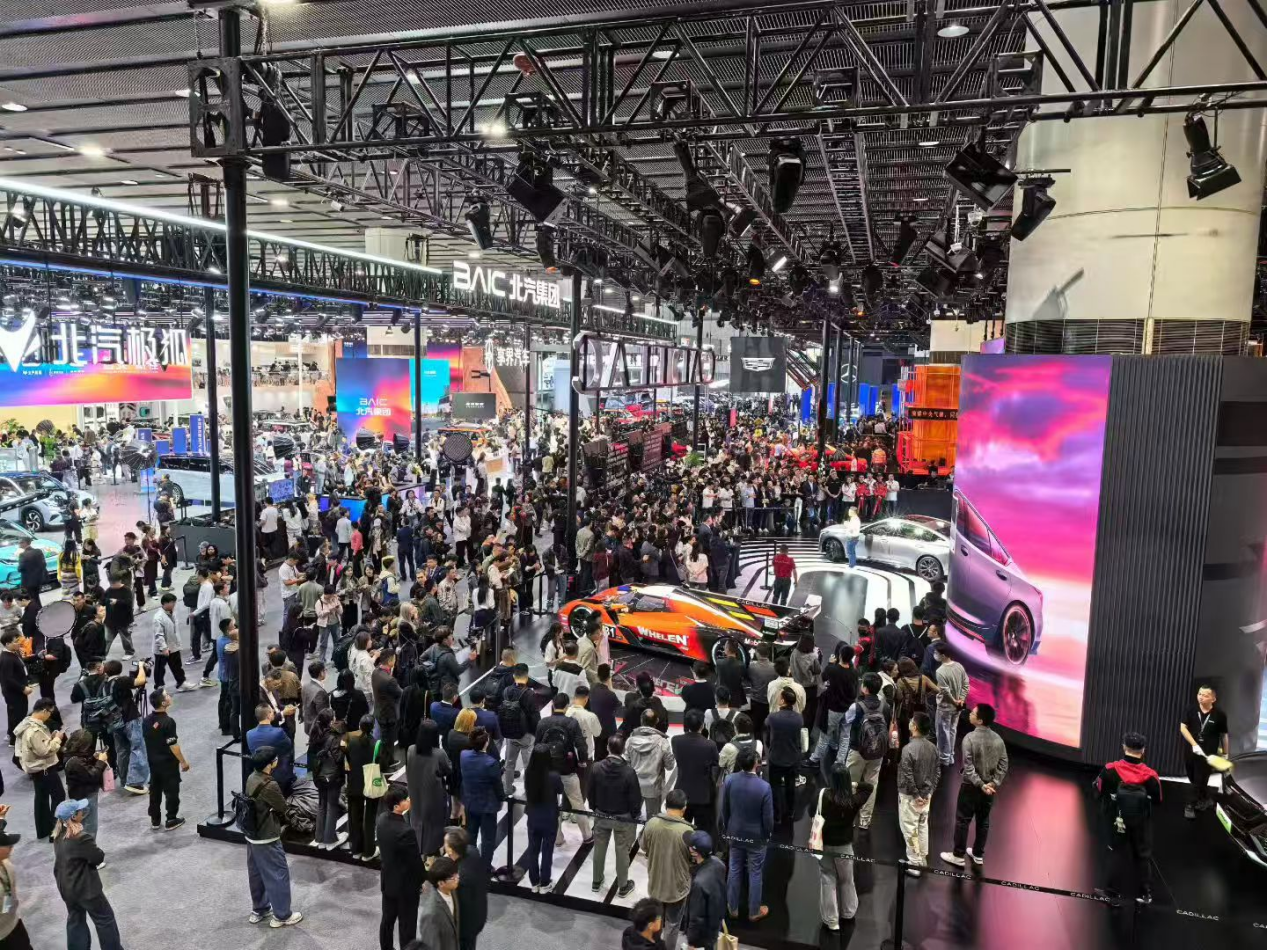
Joint ventures are accelerating their response to China's smart EV demands, moving beyond retrofitted "oil-to-electric" platforms. BMW unveiled the next-generation iX3 with a sixth-gen e-drive and 800V platform. Mercedes showcased the MMA-based pure-electric CLA boasting 866 km CLTC range—370 km rechargeable in 10 minutes. The Audi Q6L e-tron, the first model on the PPE luxury platform, features a 107 kWh battery charging from 10% to 80% in 20 minutes.
Beyond pure-electric models, joint ventures are advancing "intelligence across powertrains." The Dongfeng Nissan Teana HarmonyOS Edition elevates fuel vehicle intelligence, while the GAC Toyota Bochi 7 enters the 200,000-yuan EV segment with a "new luxury trio"—dual-chamber air suspension, HarmonyOS Cockpit, and lidar-assisted driving—demonstrating deep adaptation to Chinese consumer needs.
Intelligent Refinement and Ecosystem Integration Emerge as Defining Themes
If the apparent divide at the auto show reflects surface changes, then deepened intelligence and ecosystem integration represent the industry's fundamental transformation. Competition has evolved from individual models or standalone technologies to comprehensive contests between "intelligent systems + ecosystem networks."
The focus of intelligent features has shifted from adding functions to refining scenario-based experiences and model evolution. In autonomous driving, Li Auto's VLA driver model uses reinforcement learning for self-optimization, accurately identifying complex traffic lights, avoiding construction zones, and enabling smoother acceleration/lane changes. It can even self-park in any Chinese parking lot. The XPeng X9 super range-extender model drew strong interest for its advanced autonomous driving, with 79% of buyers opting for the high-end ADAS version.
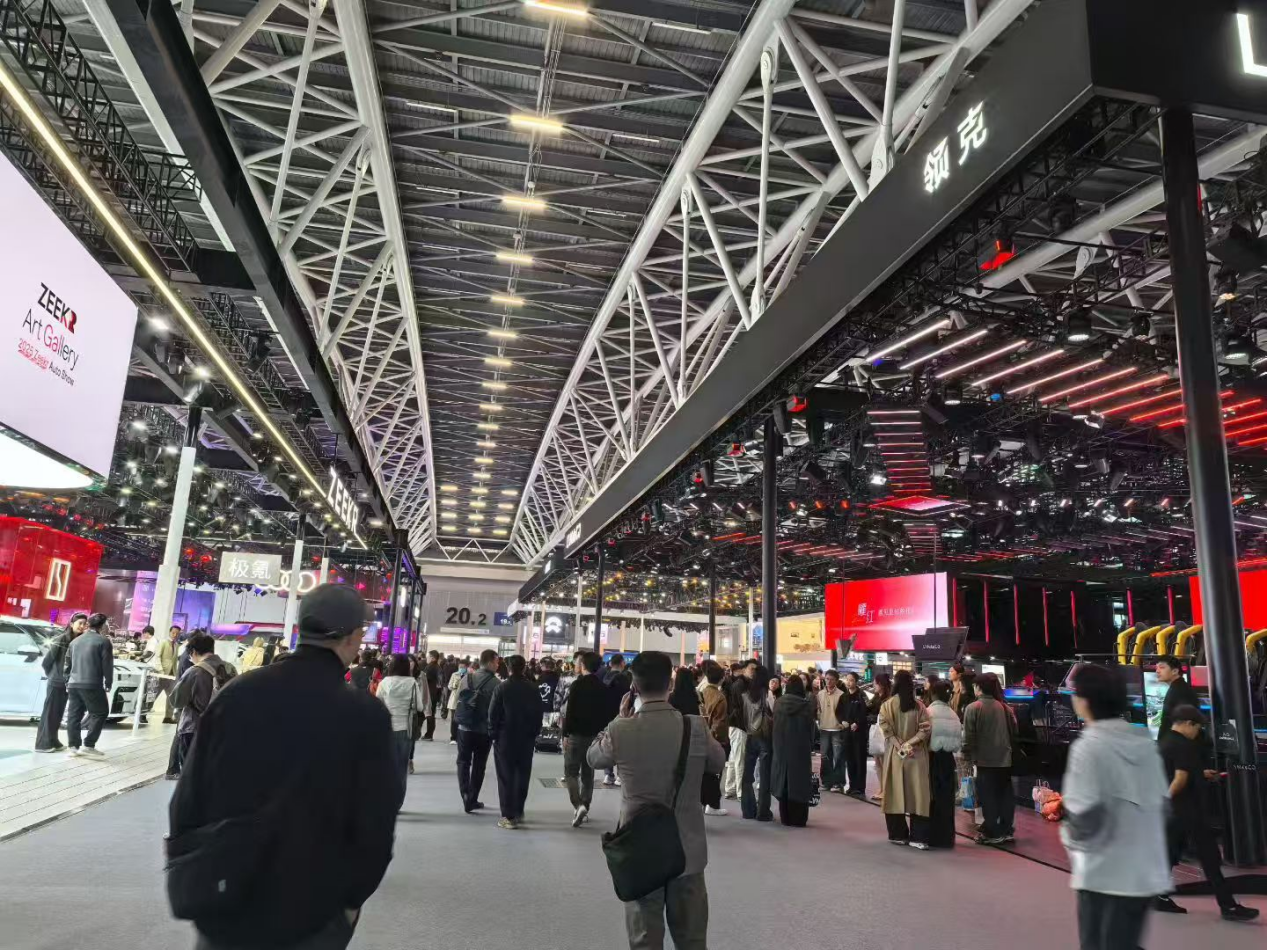
Traditional brands are keeping pace. GAC's Hyper brand became China's first automaker certified for L3 testing at 120 km/h. The Audi Q6L e-tron and BMW's next-generation iX3 feature intelligent driving assistance systems tailored for Chinese roads. These advances prove smart driving has become practical and a key purchase consideration.
Smart cockpits are evolving into interconnected hubs, with HarmonyOS Cockpit leading this transition. Models like the Teana HarmonyOS Edition, Xiangjie S9, and GAC Toyota Bochi 7 integrate with home appliances, supporting features like commute pre-planning and emergency alerts. Mercedes' new pure-electric CLA, equipped with MB.OS, AI voice assistant, and OTA updates, delivers more intuitive interaction. This "cockpit-as-living-space" concept is reshaping perceptions—transforming cars from mere transport to intelligent mobile spaces.
Collaborations between automakers and tech companies are becoming industry norms. Huawei's partnerships are yielding significant results: its joint venture with GAC (Qijing brand) will launch two models in 2026 featuring Huawei's Qiankun intelligent solutions. deepened collaboration with Changan's Avatr aims to co-develop 17 models by 2030. Partnerships like BMW-Momenta and Audi-Horizon Robotics underscore tech firms' crucial role in chips, software, and autonomous driving algorithms.
Partnerships have evolved beyond simple technology grafting to "pre-installed hardware + software iteration" business models. For instance, the Qijing model completed extreme heat testing and intelligent chassis calibration. The integration of Huawei's Qiankun L3 architecture with HarmonyOS Cockpit will deliver continuously enhancing user experiences.
The ecosystem concept now extends to energy and services. Li Auto's "last 100 meters" smart charging enables vehicles to autonomously enter stations, receive cloud-allocated chargers, and self-checkout—with robotic charging arms planned. XPeng aims to deploy 1,000+ ultra-fast charging stations overseas within three years, integrating charging, data, and diagnostics. As official mobility partner, Ruqi Mobility offered its fifth consecutive year of free Robotaxi rides, transforming autonomous driving from concept to tangible experience. These developments confirm the automotive ecosystem now encompasses full-chain "mobility-energy-service" networks.
The emerging pragmatism of EV startups and counteroffensive of legacy brands reflect more than a zero-sum game. This signals the industry's natural progression from unbridled growth toward maturity. As marketing buzz becomes less decisive, sustained competitiveness will hinge on technological innovation, ecosystem integration, cost control, and user service.
Trends indicate China's auto market has entered a new stage of "value-driven competition." With new energy vehicle penetration exceeding 50%, the market is shifting from volume expansion to stock optimization. Consumers now prioritize technological reliability and scenario-specific experiences. The ecosystem of co-opetition between automakers and tech firms will deepen, accelerating the industry's transition toward "AI-defined vehicles." Localized innovation by traditional and joint-venture brands will further foster healthier competition.




 Room 1104,Block B,JingBan Building,6 Middle Beisanhuan Road,Xicheng District,Beijing
 (8610)62383600
 quanqixiang@carresearch.cn
Follow us
Scan the QR code to follow our official WeChat account车市睿见 Interact on MicroBlog@车市睿见
 京公网安备:11010202007638号|京ICP备17032593号-2|Report illegal and bad information:010-65993545-8019 jubao@carresearch.com
Legal support:Beijing Yingke Law Firm|All rights reserved, DO NOT reproduce without permission

 News
News