
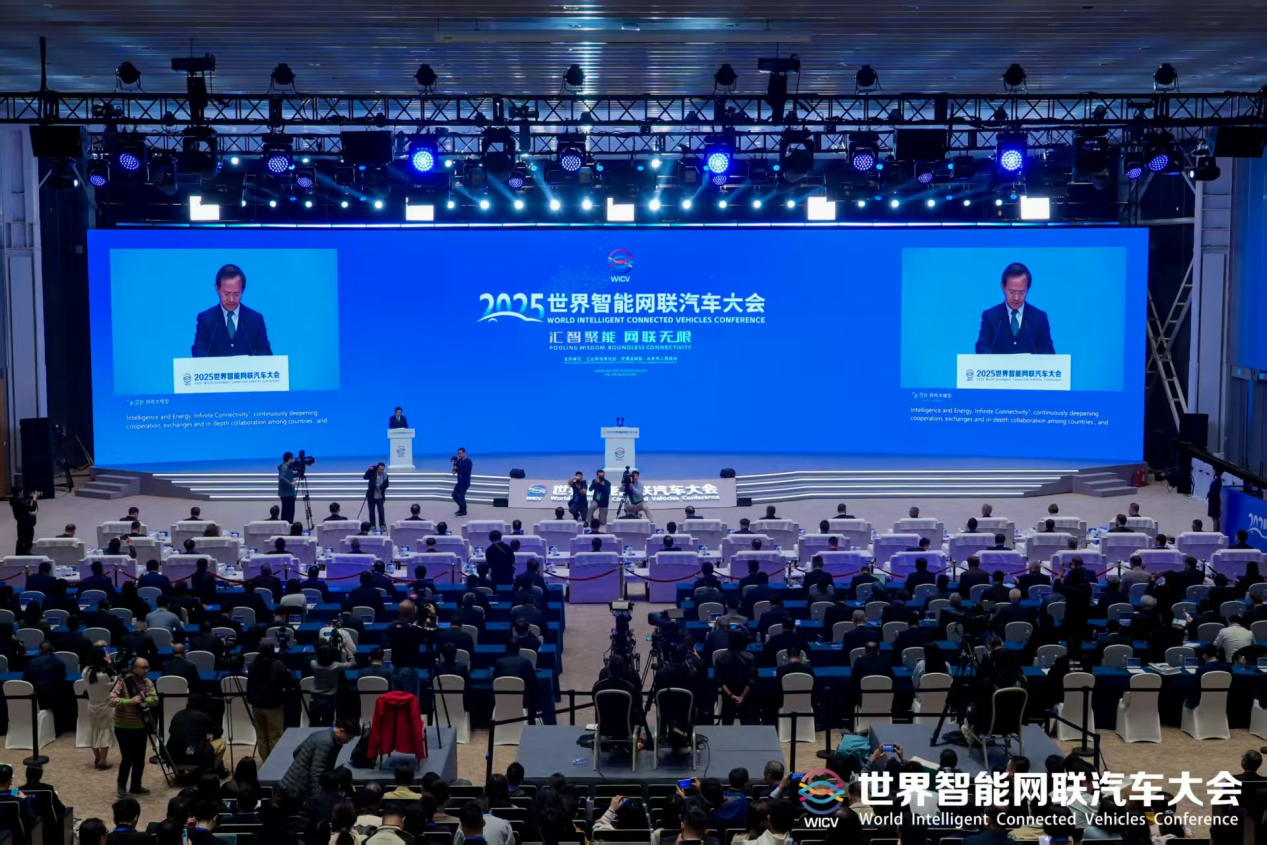
 At this critical juncture where the global ICV industry is enhancing technological maturity and moving towards large-scale development, and amid the industry consensus that "electrification is the first half, intelligentization is the second half" of the automotive game, the 2025 World Intelligent Connected Vehicle (WICV) Conference was held in Beijing from October 16th to 18th, 2025. This conference served as a vital window into the global automotive industry's intelligent transformation, clearly outlining China's path from "catching up" to "leading" in this field. The conference not only released landmark documents like the "Ten Major Achievements in ICV Standardization" and the "ICV Network Technology Roadmap (2025-2030)," but also launched the "Vehicle-Road-Cloud Integration" Sino-Foreign Collaborative Development and Testing Initiative.
Breaking Barriers, Implementing Solutions: The Shift from Vehicle Intelligence to System Intelligence
Currently, artificial intelligence has evolved from a "nice-to-have" technological option in the ICV industry to a "core variable" crucial for corporate survival and development, deeply penetrating the entire industrial chain from R&D design, production manufacturing, operations management, to market services. On the production end, humanoid robots are entering factories alongside fully automated production lines, significantly boosting production efficiency; AI technologies dynamically adjust component inventory, effectively enhancing supply chain responsiveness and resilience. On the service end, fault early warning and intelligent diagnosis systems based on diverse vehicle data are maturing, and "personalized" precision service models are gaining increasing consumer acceptance. Regarding safety assurance, intelligent technologies can send warnings and guidance information to vehicles when bad weather or obstructed views make traffic signals hard to identify; in the event of sudden traffic accidents or geological hazards, the system can push real-time alerts about the event type, location, and affected area, significantly improving vehicle perception and response capabilities.
"Vehicle-Road-Cloud Integration" is a technical pathway first proposed and implemented by China. "China is the first country internationally to propose and practice the 'Vehicle-Road-Cloud Integration' technical pathway, and has now moved from the pilot exploration phase into a critical period of large-scale scenario application," said An Tiecheng, Chairman of CATARC, in his speech at the conference's main forum, accurately summarizing the current phase of the industry.
As one of the key achievements released at this conference, the "Phased Achievements of the 'Vehicle-Road-Cloud Integration' Application Pilot Program" indicate that 20 pilot cities (consortia) across China have identified ten key functional scenarios. These cover traffic signal information services, traffic event warnings, and collaborative collision avoidance for vulnerable road users. These scenarios address various complex road conditions, utilizing vehicle-road-cloud collaboration to enable information dissemination, risk warning, and trajectory planning, providing effective support for the commercial implementation of systems for smart public transport, unmanned delivery, smart passenger vehicles, and urban logistics.
"'Vehicle-Road-Cloud Integration' can be understood as 'Smart Vehicles + Intelligent Roads + Powerful Clouds.' Leveraging C-V2X technology, it enables real-time data interaction between vehicles, roads, and the cloud, making driving safer and more efficient," said Yu Zhongteng, Deputy General Manager of CICT. He mentioned that their solutions now comprehensively cover over 10 testing environments, including communities, mountainous areas, tunnels, and overpasses, and have been deployed in Beijing's High-Level Autonomous Driving Demonstration Zone, facilitating the deployment of vehicle-road coordination at hundreds of intersections. Innovative designs like "multi-pole integration" and "multi-sensor integration" are enhancing the intelligent traffic management system.
To accelerate the industrialization process, relevant authorities and the industry are also implementing three action initiatives: establishing an alliance of platform companies from pilot cities, promoting cross-regional and contiguous collaboration among city clusters, and organizing coordinated action between Chinese and foreign automakers to unify technical pathways and accelerate the mass production and deployment of functionalities.
Companies are demonstrating differentiated exploration paths in the practice of "Vehicle-Road-Cloud Integration." XPENG Motors breaks new ground with its "Triple Fusion" approach, achieving synergy between intelligent hardware and software, cloud technology and big data, and the vehicle and external ecosystems, responding to the industry's transition from "single-vehicle intelligence" to "system intelligence." Great Wall Motor, building upon the evolution of its electronic architecture, has constructed two major intelligent entities: Smart Driving and Smart Space. Through innovations like VLA + World Model and an AI-native cockpit, it is propelling the vehicle's evolution into an intelligent entity characterized by "free movement, natural interaction, and connectivity for all things."
In the field of autonomous driving, DiDi Autonomous Driving's performance was particularly notable. Its fully unmanned Robotaxi operation scenario displayed on an intelligent sand table attracted significant attention. Its intelligent operation center, Huijie Port, can plan and dispatch vehicle resources based on demand prediction models and real-time supply-demand heatmaps. The new generation of front-loaded autonomous vehicles is equipped with 33 sensors, enabling perception and recognition across all scenarios and operating conditions.
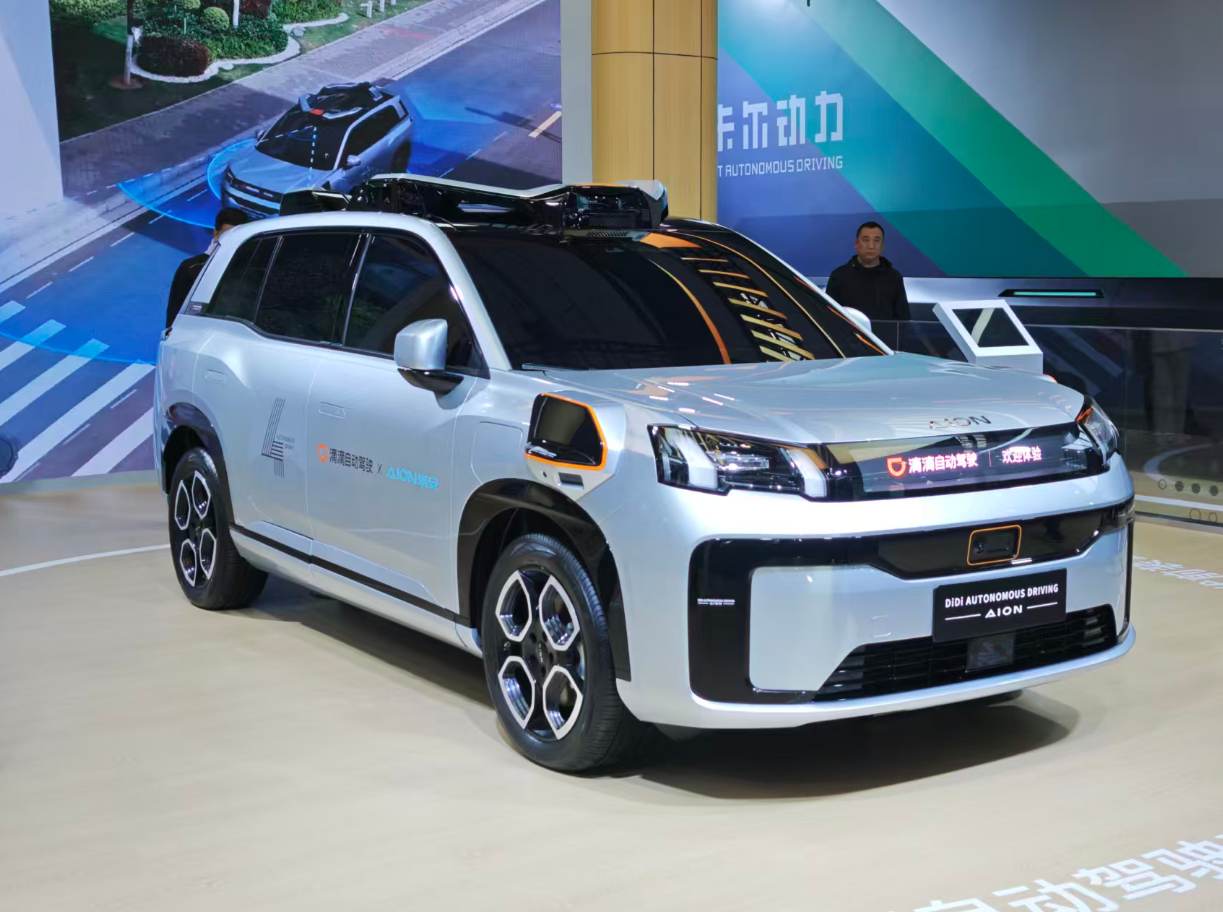
During tests conducted this year in Beijing and Guangzhou, unmanned vehicles demonstrated stable performance in complex scenarios including rush hours, late nights, and sudden downpours, steadily advancing the R&D and application of L4-level autonomous driving technology. Additionally, BAIC Group is set to complete the mass production installation of its cabin-driver fusion system based on the T55 chip. Utilizing only 72 TOPS of computing power, it integrates functions like urban Navigate on Autopilot (NOA) and Memory Parking, reducing costs by over 20% compared to traditional solutions, offering a viable path for the popularization of intelligent driving in the mainstream 100,000-150,000 RMB market.
Policy Foundations & Ecosystem Collaboration: Forging a New Paradigm for the ICV Industry
The refinement of policies and standards is a crucial guarantee for the healthy development of the ICV industry. Multiple government departments are collaborating, from planning guidance and standard establishment to regulatory innovation, to build a solid foundation for the industry. The Ministry of Industry and Information Technology (MIIT) has explicitly stated it will research and formulate the "15th Five-Year Plan" for the ICV and new energy vehicle industry development, strengthen production consistency supervision and management for vehicles equipped with combined driving assistance systems, regulate corporate OTA activities, and continuously improve the standard system for driving assistance systems, automated driving systems, functional safety, information security, and data security.
An official from the State Administration for Market Regulation's (SAMR) Defective Product Recall Technical Center stated that efforts will be made to improve the quality and reliability standard system for ICVs, strengthen requirements for ICV product market access, recall management, and Software Over-The-Air (OTA) updates. The focus is on "enhancing the supply of automotive product quality services, innovating safety supervision, and helping companies ensure quality and innovation standards." The Ministry of Transport, from a macro perspective, is promoting the construction of an intelligent comprehensive multi-dimensional transportation network, fostering the deep integration of AI and transportation, and continuously advancing international cooperation in the ICV field to achieve the vision of "efficient passenger transport and seamless cargo flow."
The release of industry standards and technology roadmaps has further clarified the direction for industrial development. The ten major achievements in ICV standardization released by the China Automotive Technology and Research Center (CATARC) show that China has formulated and released nearly 100 national, industry, and association standards. Among these, three mandatory national standards cover vehicle safety, functional safety, and information security, establishing a "safety red line" for the industry. The "Intelligent Connected Vehicle Network Technology Roadmap (2025-2030)" released by the China Academy of Information and Communications Technology (CAICT) sets quantitative targets: by 2030, the penetration rate of 5G in new passenger vehicles in China will reach 95%, the penetration rate of Cellular Vehicle-to-Everything (C-V2X) direct communication capability will reach 30%, and 5G/5G-A networks will guarantee a transmission latency of 50-100 milliseconds. Furthermore, the development of key common standards for vehicle-cloud and cloud-cloud data interfaces effectively addresses the previous "data silo" problem in "Vehicle-Road-Cloud Integration" pilots, clearing obstacles for nationwide system construction.
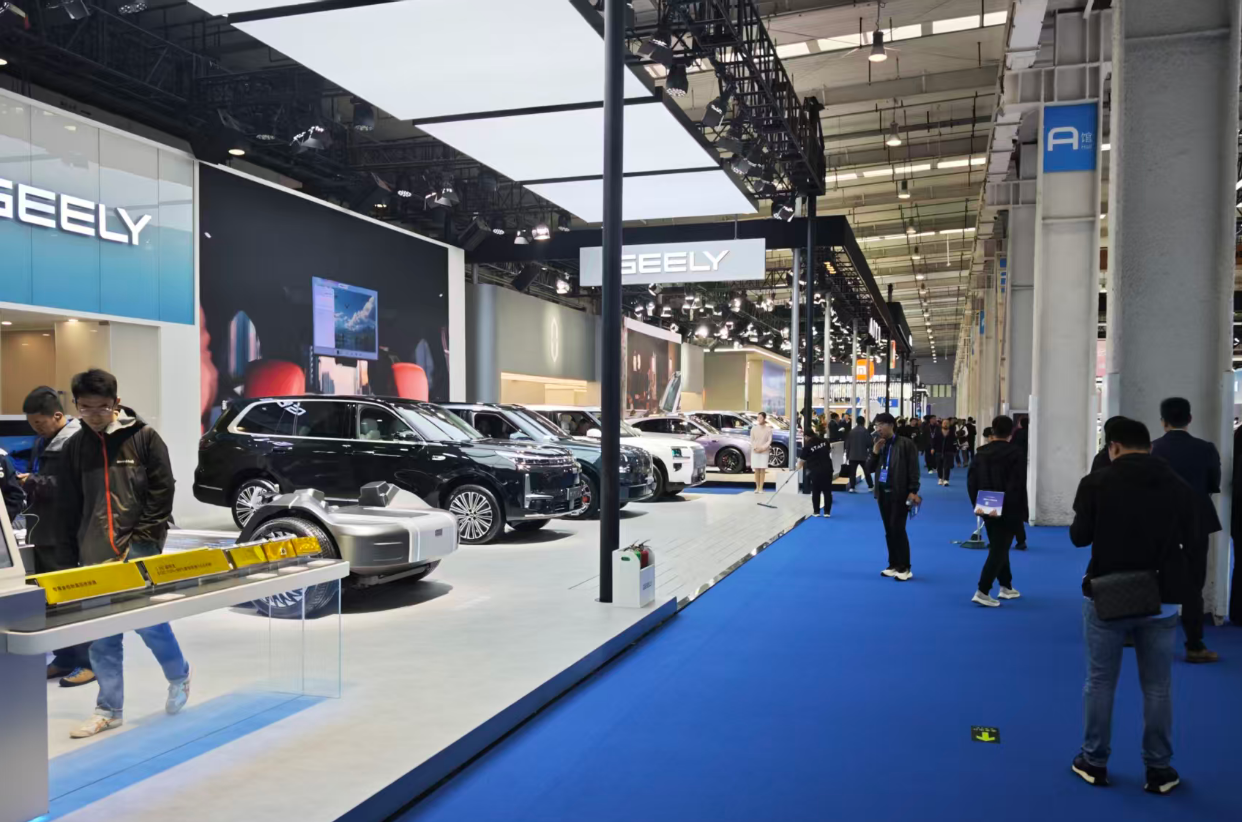
Industrial chain collaboration and ecosystem co-creation have become the core consensus for industrial development. Executives from multiple automotive companies also echoed the call for ecosystem synergy, sharing their views on intelligent development during plenary sessions. Lei Jun, Founder, Chairman, and CEO of Xiaomi Group, stated that innovative intelligent technologies are reshaping vehicle product definition, production models, business models, and user experience. He emphasized that the development of ICVs is at a critical historical juncture, which is not a zero-sum game but requires industry-wide unity to jointly build and share a new ICV ecosystem. William Li, Founder of NIO, believes the value brought by future autonomous driving is immeasurable. "Firstly, our time will no longer be 'handcuffed' by the steering wheel, unleashing immense productivity, and the car will become a mobile third living space," he said. Li Shufu, Chairman of Geely Holding Group, added that proprietary R&D is the foundation, while open collaboration is the essential path for industrial growth, necessitating efforts to promote standard establishment, advance cross-sector integration, and return to the essence of manufacturing by respecting industrial principles.
The conclusion of the 2025 World Intelligent Connected Vehicle Conference (WICV) marks the global automotive industry's official entry into a new phase of "system-wide competition" in its intelligent transformation. From the implementation of "Vehicle-Road-Cloud Integration" scenarios to the experiential upgrade of cabin-driver fusion, and from the gradual improvement of standard systems to the deep advancement of ecosystem collaboration, China's automotive industry, propelled by the triple forces of policy guidance, market drive, and technological breakthroughs, is accelerating its transition from being a "follower" to a "leader." "Looking ahead, we must accelerate the development of an intelligent, comprehensive, and multi-dimensional transportation network, promote the deep integration of artificial intelligence and transportation, and lead industrial development through technological innovation," said Minister of Transport Liu Wei. He emphasized the ministry's commitment to continuously promoting international cooperation in the ICV field to realize the vision of "efficient passenger transport and seamless cargo flow."
In the future, with continuous breakthroughs in technologies like 5G-Advanced, large AI models, and high-performance computing chips, coupled with the ongoing refinement of policies and regulations, the intelligent connected vehicle (ICV) will truly complete its paradigm shift from a mere "means of transport" to an "intelligent space." As Xu Xinchao, Deputy Secretary-General of the People's Government of Beijing Municipality, stated at the closing ceremony, only by fostering deep collaboration and integrated innovation across the industrial chain with an open mindset, while upholding safety as the bottom line and focusing on user value, can we seize the initiative in this industrial transformation.




 Room 1104,Block B,JingBan Building,6 Middle Beisanhuan Road,Xicheng District,Beijing
 (8610)62383600
 quanqixiang@carresearch.cn
Follow us
Scan the QR code to follow our official WeChat account车市睿见 Interact on MicroBlog@车市睿见
 京公网安备:11010202007638号|京ICP备17032593号-2|Report illegal and bad information:010-65993545-8019 jubao@carresearch.com
Legal support:Beijing Yingke Law Firm|All rights reserved, DO NOT reproduce without permission

 News
News